
Food & digestion
How much fiber does your gut need?
A bowl of lentil soup can do more for a low-fiber lunch than a dramatic change of diet. Here’s how to give your gut time to adjust.
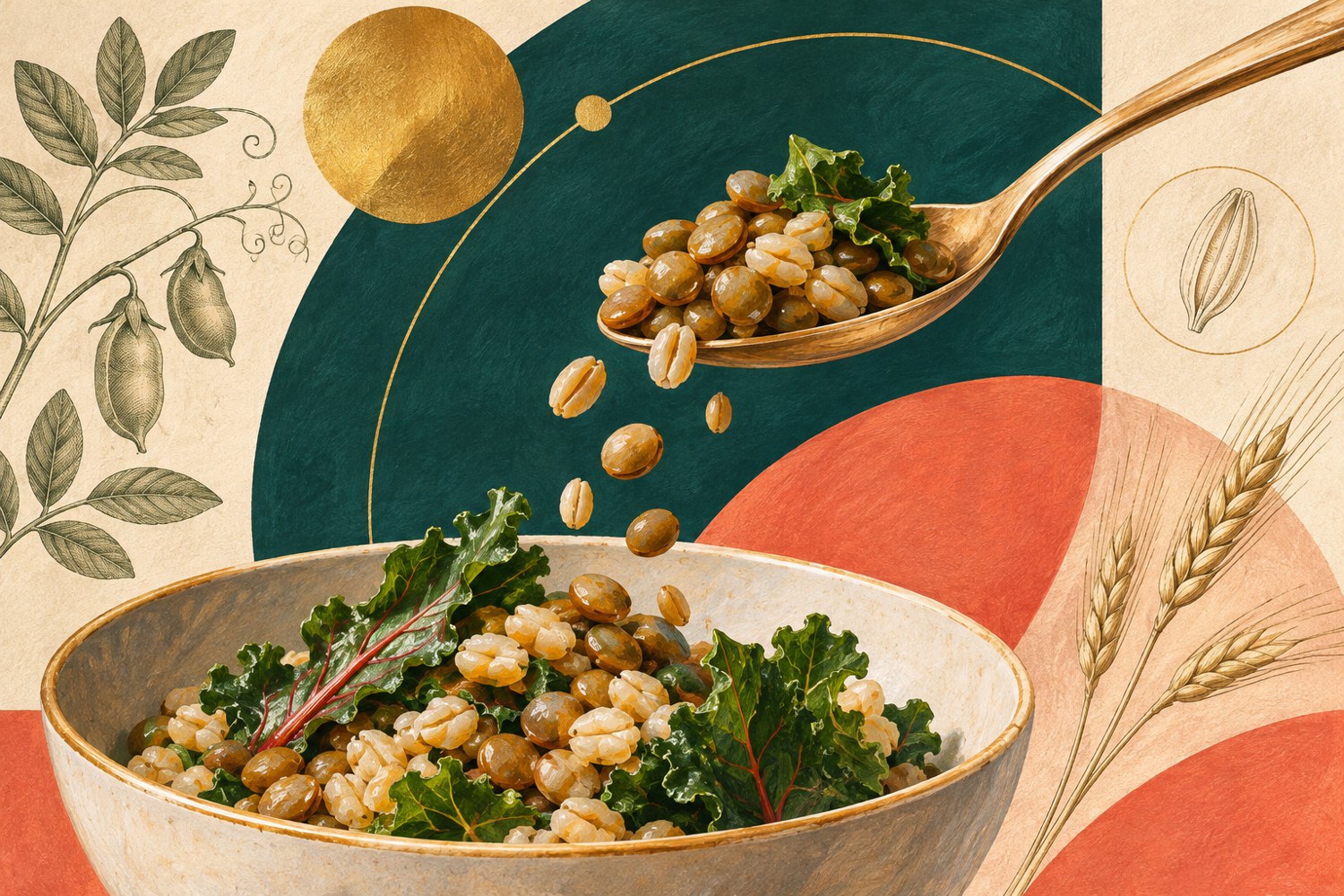
Fiber starts with food, not a genetic calculation
Fiber is the part of plant foods that your body cannot fully digest. Different kinds do different jobs: some hold water and help soften stool, others add bulk, and some feed bacteria living in your gut. That makes a bowl of lentil soup more than a number on a nutrition label. It brings a food source of fiber into an otherwise familiar meal. Genetics adds an interesting layer, but it does not replace these basics. Your DNA does not set a precise daily fiber amount. A mix of beans, fruit, vegetables and whole grains offers more variety than relying on one powder. Start by looking at what is already on your plate, rather than searching for a genetically perfect ingredient.
What genes and variants can actually tell you
A gene is a stretch of DNA containing biological instructions. A variant is a difference in the DNA sequence at a particular location. TCF7L2 and FTO are human genes studied in relation to metabolism or diet; rs7903146 is the name of a studied variant in TCF7L2. These names describe biology, not a menu or a personal fiber target. It also helps to distinguish genotype from phenotype. Genotype describes genetic makeup, including which version of a variant someone carries. Phenotype describes observable characteristics or outcomes. Your reported bloating or stool pattern is an observation about how your body is doing, not a reading of your genotype. Keeping these categories separate prevents a common mistake: treating a genetic association as an explanation for every digestive experience.
TCF7L2 connects to metabolism, not a fiber formula
The TCF7L2 variant rs7903146 is associated with type 2 diabetes risk and with beta-cell and incretin biology. Beta cells are involved in insulin production, while incretin biology concerns signals linking food intake with insulin responses. This is a connection between eating and metabolic regulation, but it is not the same question as how much fiber makes a particular lunch comfortable. An association means that researchers observe a relationship; it does not, by itself, establish that one factor causes another. Nor does a risk association determine an individual's future. The cited research does not support prescribing or avoiding fiber according to this genotype. Reading about TCF7L2 should therefore encourage thoughtful interpretation of nutrition research, not fear of lentils, chickpeas or whole grains.
FTO and the limits of gene–diet findings
FTO also appears in gene–diet research, but it is not a calculator for fiber requirements. Researchers can ask whether an association between diet and an outcome differs across genetic groups. That question is called a gene–diet interaction question. It is more specific than simply asking whether fiber belongs in an everyday eating pattern. For fiber, findings from observational cohorts vary. Observing people over time can reveal patterns, but a pattern does not automatically establish cause or justify a personalized instruction. The cited research offers no genotype-specific fiber prescription or avoidance rule for either FTO or TCF7L2. A headline about genes and diet therefore needs a second question: did the research establish something actionable, or did it identify a relationship that still needs careful interpretation?
Your genes are not your gut bacteria's genes
There are two different genetic stories around a fiber-containing meal. One concerns your human genes, including TCF7L2 and FTO. The other concerns genes in the microorganisms living in your gut. Microbial fermentation genes belong to those organisms, not to your human genotype. Keeping that distinction clear helps explain why “genetics and gut health” is not a single, simple calculation. Some fiber feeds gut bacteria; that is a different process from the metabolic associations studied for a human variant such as rs7903146. Neither story supplies an exact personal fiber dose here. In daily life, the useful connection is less abstract: choose varied plant foods, make changes gradually, and notice comfort. A genetic label cannot substitute for observing how a manageable food change fits your meals.
Let the general range guide a gradual change
For most adults, the NIDDK guidance gives a useful daily range of 22–34 grams of fiber, depending on age and sex. Treat that as general nutrition guidance, not a number calculated from DNA. If you usually eat little fiber, suddenly moving to a much higher intake can leave you bloated. A gradual approach gives your gut time to adjust without requiring a complete dietary overhaul. Choose one change you would happily repeat: add chickpeas to rice, include lentil soup, or bring a whole-grain food into a familiar meal. Drink water regularly so the extra fiber can do its job. Notice whether the change feels comfortable over the following days. Those observations concern your everyday phenotype; they do not reveal which genetic variant you carry.
Sources & further reading
- NIDDK · Dietary fiber and constipation ↗
- PubMed Central · Published research on genetics and diet (PMC3433658) ↗
- PubMed Central · Published research on genetics and diet (PMC4094781) ↗
Educational reading to enrich your conversation with a healthcare professional, interpreted in the context of your own health and needs.