
Wearable technology
Can I trust my watch’s deep-sleep score?
You wake up refreshed. Your watch says you barely got any deep sleep. Before you worry, look at what the device actually measured.
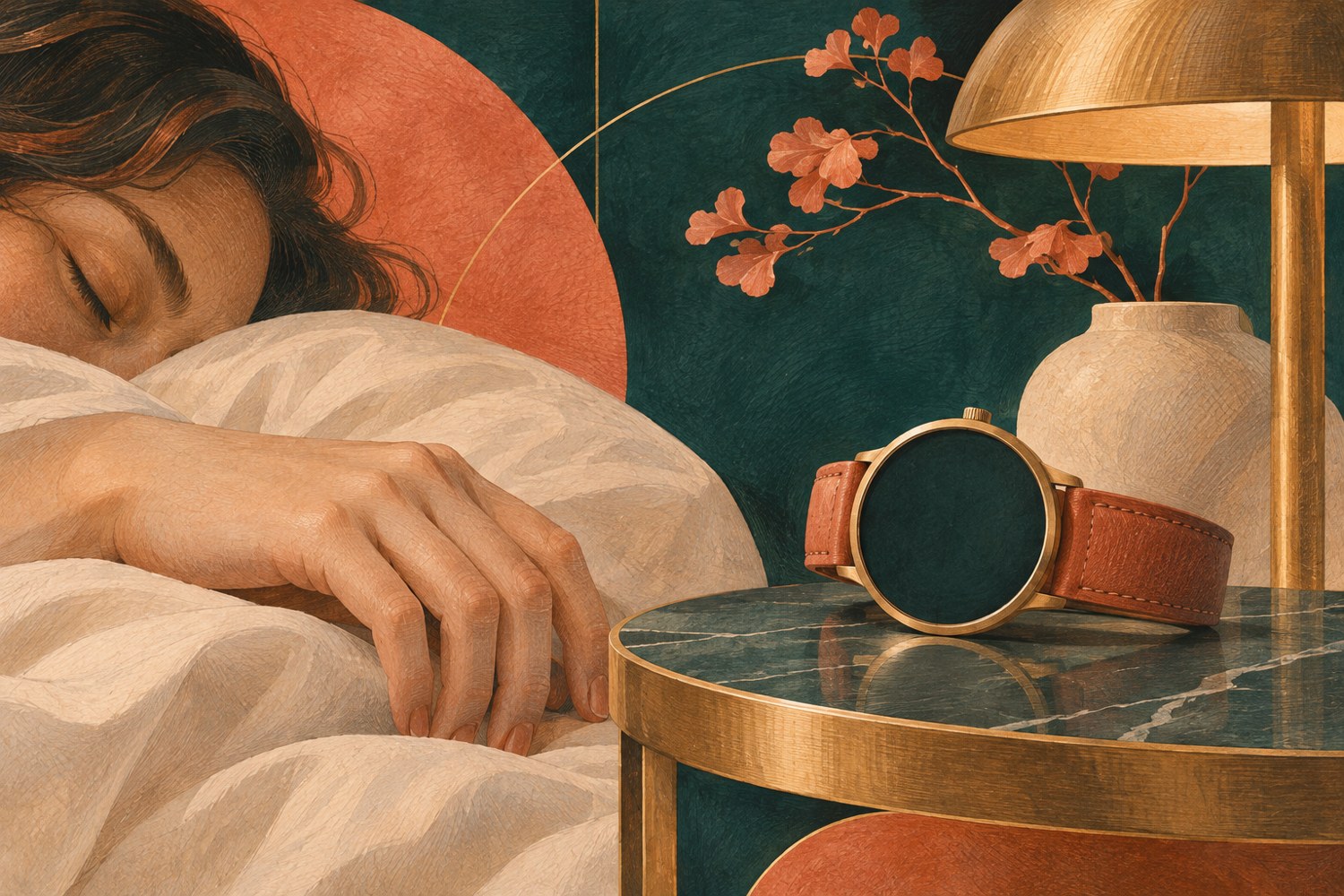
Your watch measures signals, not genes
Waking refreshed after a supposedly poor night creates an understandable puzzle. Many wrist trackers measure movement and use an optical sensor to follow your pulse. Software interprets patterns in these signals to estimate sleep and its stages. The stage label is therefore an inference, not a direct observation of brain activity. A clinical sleep study has access to additional signals, including brain activity measured with EEG. That distinction also matters for genetics. Your watch does not measure your genotype: the genetic variants you carry. Its deep-sleep estimate cannot reveal a sleep-related gene or explain your personal sleep requirement. Lying quietly while awake can also be mistaken for sleep, illustrating why a plausible-looking chart still needs context.
Separate the genetic blueprint from the observed pattern
A gene is a stretch of DNA with instructions that contribute to biological function. A variant is a difference in the DNA sequence. Researchers investigate genes such as BHLHE41 and ADRB1 to understand biological contributions to sleep. Studying these genes is different from interpreting the signals collected by a watch, even though both activities concern sleep. Genotype describes genetic makeup; phenotype describes an observable characteristic, such as sleep duration. A watch-derived estimate is an attempted measurement of a characteristic, not a reading of the underlying DNA. Keeping these categories separate prevents a tempting leap: sleeping less on a chart does not establish that you inherited a reduced need for sleep. Nor does feeling refreshed identify which variants you carry.
What the BHLHE41 twin research can tell us
The rare BHLHE41 variant Y362H was studied in human twins in relation to shorter sleep and responses to sleep deprivation. Its value lies in the specific biological question: can a genetic difference help researchers investigate why sleep patterns and responses to lost sleep differ? The published research combines observations in a small family setting with mechanistic work, rather than offering general sleep advice. A mechanism concerns how a biological effect might happen; an association concerns characteristics observed together. Observing a variant alongside shorter sleep does not, by itself, establish causation for every aspect of that pattern. Mechanistic experiments can help investigate explanations, but they do not make a small study representative of everyone who receives a low deep-sleep score.
ADRB1: an unusual finding, not a sleep target
Rare ADRB1 variants have also been investigated in families with natural short sleep. These families offer researchers a way to study biological contributions to sleep need. The everyday lesson is not that short sleep should become a goal. Most people still need the usual recommended amount of sleep, and these unusual findings do not justify deliberately restricting it. Together, the ADRB1 and BHLHE41 studies show why genetics can illuminate differences between people without providing a shortcut for interpreting your watch. A shorter estimated night could not identify either gene's variants. Neither a high score after little sleep nor a low deep-sleep estimate establishes natural short sleep. Findings from selected families should remain connected to the people and questions actually studied.
Read the week alongside your experience
Instead of asking a single score to explain your biology, compare several nights with a short diary. Record when you went to bed, when you woke, and whether you felt sleepy during the day. A bedtime that drifts later across workdays may be more useful to notice than one disappointing stage estimate. The diary and the watch describe different aspects of the same experience. For example, if you felt refreshed but the app reported little deep sleep, record the disagreement rather than treating either observation as a genetic answer. This is a practical comparison, not a diagnostic experiment. It can help organize a conversation about sleep while avoiding the unsupported conclusion that your genes explain the score or permit less rest.
Keep three different questions separate
It helps to ask three questions: what did the device measure, how are you functioning, and what does genetic research actually establish? Pulse and movement support estimates. Your diary records experiences and timing. Research on rare variants investigates biological differences under particular study conditions. None of these sources can simply stand in for the others. This separation makes wearable information more useful without asking it to do too much. Genetic findings are interesting because they open questions about mechanisms, not because they turn a consumer score into a personal biological verdict. Association is not automatically causation, and a phenotype is not a genotype. You can remain curious about BHLHE41 and ADRB1 while treating the watch as one limited source of information.
Sources & further reading
- American Academy of Sleep Medicine · Consumer sleep technology ↗
- Research study · BHLHE41 Y362H, shorter sleep and response to sleep deprivation ↗
- NIH Research Matters · ADRB1 and families with natural short sleep ↗
Educational reading to enrich your conversation with a healthcare professional, interpreted in the context of your own health and needs.